
Swing Trading vs Day Trading: Which Strategy Fits Your Goals?

Summary
Day Trading: Opening and closing positions within the same trading day, never holding overnight. Day traders make multiple trades daily, targeting small profits from short-term price movements. Requires full-time attention, significant capital ($25,000+ in the US for pattern day trading, according to FINRA), and sophisticated tools. Screen time: 4-8 hours daily during market hours.
Swing Trading: Holding positions for days to weeks, capturing larger price movements. Swing traders make fewer trades, targeting bigger profits per trade. Can be done part-time with standard brokerage tools. Screen time: 30 minutes to 2 hours daily for analysis and trade management.
Capital Requirements: Day trading can require more capital in certain markets, especially U.S. stocks, due to pattern day trading rules and higher transaction frequency, which can magnify costs and repeated small losses. Swing trading works with smaller accounts because fewer trades mean lower costs and less capital tied up in margin requirements.
Time Commitment: Day trading demands constant market monitoring during trading hours. You can't maintain a full-time job while day trading properly. Swing trading allows you to work full-time because positions develop over days, not minutes. You check charts before market open, during lunch, and after market close.
Success Rates: Most day traders lose money in their first year. The statistics are brutal - studies show 95% of day traders quit within the first year. Swing trading has higher success rates because it's less demanding mentally, costs less in transaction fees, and doesn't require split-second decisions.
Cost Analysis: Transaction costs scale with position size. Day trading often uses larger position sizes because tighter stop losses require more lots to maintain the same percentage risk. On EUR/USD, a 2-pip spread on a larger intraday position can translate into a meaningful upfront cost per trade. Swing trading typically uses wider stops and therefore smaller position sizes for the same risk percentage, reducing the spread cost per trade. While total costs still depend on how often you trade, position sizing plays a central role in determining how much of your capital is consumed by spreads and commissions.
Risk Profile: Day trading risk compounds faster because you make more decisions. Each decision is an opportunity to lose money. Swing trading spreads risk over fewer, more considered trades. You have time to analyze, plan, and execute without pressure. In fast intraday conditions, day traders are also more exposed to slippage and rapid spread changes, due to smaller stops and larger positions. Swing traders face a different trade-off: while slippage risk is less severe, holding positions overnight introduces gap risk, and potential financing costs.
Critical Reality: Day trading sounds exciting but most traders underestimate how difficult it is. The emotional toll of watching screens all day, making quick decisions under pressure, and dealing with consecutive losses destroys most accounts within months. Swing trading is less glamorous but more sustainable for most people.
What Day Trading Is
Day trading means opening and closing all positions within a single trading day. You start with a clean slate every morning. By market close, you're flat - no positions held overnight.
The typical day trader wakes up before market open. You review overnight news, check economic calendars, and scan charts for setups. When markets open, you're watching multiple instruments simultaneously. EUR/USD, GBP/USD, S&P 500 futures, maybe gold - your eyes bounce between screens looking for opportunities.
You spot a setup on the 5-minute chart. EUR/USD broke above resistance. You enter long. Your stop-loss is 10 pips below. Your target is 15 pips above. The trade takes 20 minutes. You exit with 15 pips profit. You made $150 on a standard lot.
That's one trade. Now you do it again. And again. Some trades hit targets. Others hit stops. By lunch, you've made 8 trades. Four winners, four losers. You're up $200 for the morning. The afternoon session brings different market conditions. Volume picks up. Volatility increases. You make 6 more trades. Two winners, four losers. You end the day up $50 after spreads and commissions.
This is day trading. It's not sitting by a pool with a laptop making thousands per day. It's sitting in front of screens for 6-8 hours, making quick decisions, managing emotions when trades go against you, and grinding out small profits while keeping losses small.
The Reality Nobody Mentions
Day trading is exhausting. After 8 hours of watching screens, your brain is fried. You can't think clearly. This mental fatigue leads to mistakes in the afternoon - taking trades you shouldn't, moving stops when you said you wouldn't, revenge trading after losses.
You need significant capital. In the US, the pattern day trading rule requires a $25,000 minimum in your account if you make more than 3 day trades in a rolling 5-day period. Other countries have different rules, but the principle holds - you need capital to absorb losses and meet margin requirements.
Transaction costs eat profits. Every trade costs you the spread plus commission (if your broker charges it). Make 20 trades per day and those costs add up fast. You need to win enough to cover costs before you're actually profitable.
Most day traders quit. Not because they're lazy or stupid. They quit because the reality doesn't match the marketing. It's harder, more stressful, and less profitable than expected.
What Swing Trading Is
Swing trading involves holding positions for several days to several weeks, aiming to capture meaningful price movements that unfold over time. Rather than reacting to intraday fluctuations, swing traders focus on broader market structure and allow trades the time they need to develop.
Your typical week as a swing trader looks different from day trading. Sunday evening, you scan charts for setups. You spot a bullish setup on the GBP/USD daily chart. You mark out a pre-defined level, and wait for your entry signal.
Monday morning, you place a pending buy order at your predefined level. Your stop-loss sits below the pin bar low. Your target is the previous swing high. You're risking 60 pips to make 180 pips - a 3:1 risk-reward.
Your order triggers Tuesday morning. You check your trade during lunch break. It's up 40 pips. You leave it running. Wednesday, it's up 90 pips. Thursday, it hits your 180-pip target. You made $1,800 on a standard lot. That's one trade over four days.
You spent maybe 2 hours total on this trade. 30 minutes analyzing Sunday night. 15 minutes placing the order Monday. 5 minutes checking it daily. Compare that to 32 hours a day trader spent at screens over the same four days.
The Swing Trading Advantage
You have time to think. When analyzing the daily chart, you're not rushed. Price action develops over days. You can walk away, come back, and the setup is still there. This removes pressure and improves decision quality.
You can work full-time. Check charts before work, during lunch, and after market close. That's enough to manage swing trades. You're not glued to screens missing your life.
Transaction costs are lower. Three trades per week means 6 entries/exits over 5 trading days. Compare that to a day trader's 50-100 entries/exits in the same period. Your costs are a fraction of theirs.
The Challenge Nobody Talks About
Swing trading requires patience. Most traders struggle with this. They enter a trade, watch it sit flat for two days, and close it early out of boredom or doubt. Then it moves to target without them. The technical skill isn't hard. The psychological skill is harder than it looks.
You're exposed to overnight risk. News breaks while you sleep. Central banks make surprise announcements. Your position can gap against you. Day traders avoid this by closing everything daily. Swing traders accept it as part of the game.
You need to be comfortable with larger stop-losses. A swing trade might risk 60-100 pips. That's larger than most day trades. The risk-reward is better (you're targeting 180-300 pips), but the dollar amount at risk per trade is higher. Not everyone handles this well psychologically.
Day Trading: Complete Breakdown
Let's get specific about what day trading actually involves.
Timeframes Used
Day traders work on 1-minute, 5-minute, and 15-minute charts. The 5-minute is the sweet spot. It's fast enough to catch intraday moves but not so fast that you're chasing noise.
The 1-minute chart is too noisy for most traders. Every tiny fluctuation looks like a signal. You overtrade. The 15-minute is too slow. Moves develop over hours, limiting opportunities. The 5-minute gives you multiple clear setups per day without overwhelming you with noise. See our full strategy guide on day trading
Entry and Exit Rules
Entry rules must be crystal clear. "Buy when price breaks resistance" is too vague. "Buy when the 5-minute candle closes above resistance with volume 1.5x average" is specific. You need this precision because you're making split-second decisions.
Exits are harder than entries. You set a target based on technical levels (previous high/low, Fibonacci extensions, measured moves). You set a stop-loss below your entry structure. But what do you do when price reaches 80% of target and starts pulling back? Most day traders struggle here.
The simple rule: if your target is hit, exit. If your stop is hit, exit. Don't adjust them mid-trade based on emotions.
Why Most Day Traders Fail
Overtrading: You sit at screens all day. You feel pressure to trade. Some days don't offer good setups. But you trade anyway because you're there. These low-quality trades kill accounts.
Spread costs: Every entry costs you the spread. EUR/USD has a 0.5-1 pip spread with good brokers. Gold has 2-5 pips. S&P 500 futures have 0.25-0.5 points. Make 20 trades daily and these costs compound fast. You need to win 55-60% just to break even after costs.Because the spread is a fixed transaction cost, it consumes a larger percentage of your profit target when you’re trading for smaller moves, making short-term trades more sensitive to execution costs.
Emotional fatigue: Hour 6 at the screen, you're tired. You miss a setup. Then you see a marginal setup and force it because you feel behind. This revenge trading is how accounts blow up. The emotional demands of day trading are extreme.
Lower timeframe volatility: Day trading timeframes exhibit more short-term volatility and random price fluctuations. Moves can reverse quickly, and minor shifts in order flow can invalidate a setup within minutes. This creates a trading environment where outcomes change rapidly, increasing both execution pressure and emotional strain.
Actual Costs
Let's do the math. You day trade EUR/USD with a 1-pip spread. You enter and exit 20 times per day. That's 20 pips paid in spreads daily.
20 pips × 20 trading days = 400 pips per month in spreads.
On a standard lot (100,000 units), 1 pip = $10. So 400 pips = $4,000 per month in spreads alone.
To make $4,000 per month profit, you need to generate $8,000 in gross profits just to break even after spreads. That's before considering commissions (if your broker charges them).
Now you see why most day traders lose. The cost structure works against you.
Swing Trading: Complete Breakdown
Swing trading operates differently. Let's break down exactly how it works.
Timeframes Used
Swing traders work on 1-4-hour, daily, and weekly charts. The daily chart is the primary timeframe. You identify trends and key levels here. The 1 or 4-hour chart helps with entry timing. The weekly chart shows the bigger picture.
The daily chart is clean. One candle represents a full trading day. Noise is filtered out. You see clear trends, support/resistance levels, and patterns. This clarity helps decision-making.
Strategies That Work
Fibonacci retracement trading: When a trendline breaks, you measure the retracement using Fibonacci levels. The 61.8% level often acts as support or resistance. Price bounces from this level, creating entry opportunities.
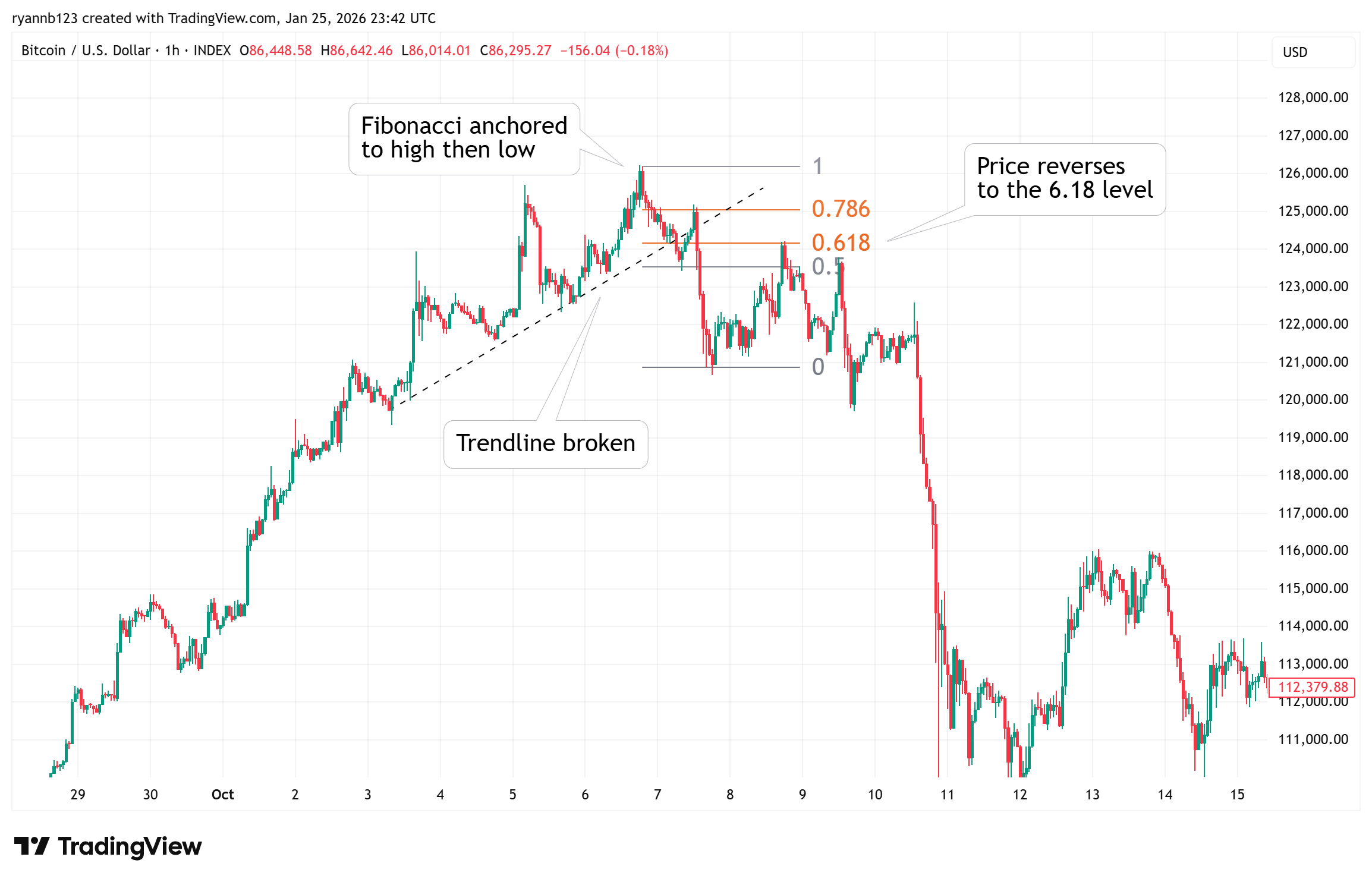
VIDEO: Swing Trading Using Fibonacci with Denislav Dantev See exactly how to use Fibonacci retracements for swing trading entries, including level identification, confirmation patterns, and position management.
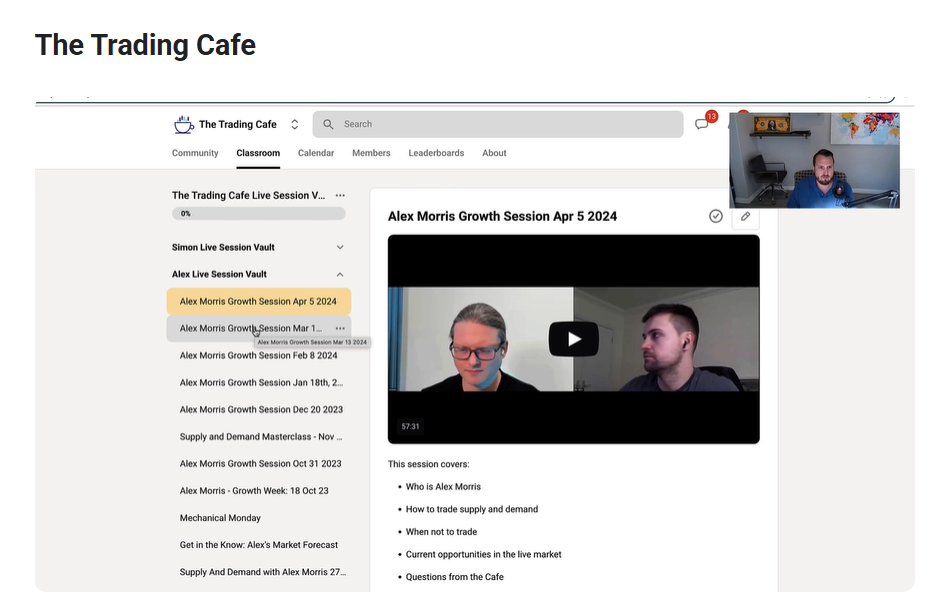
The video shows real trades using Fibonacci retracements on daily charts. You see how price respects these levels, how to identify high-probability entries, and how to manage positions over days.
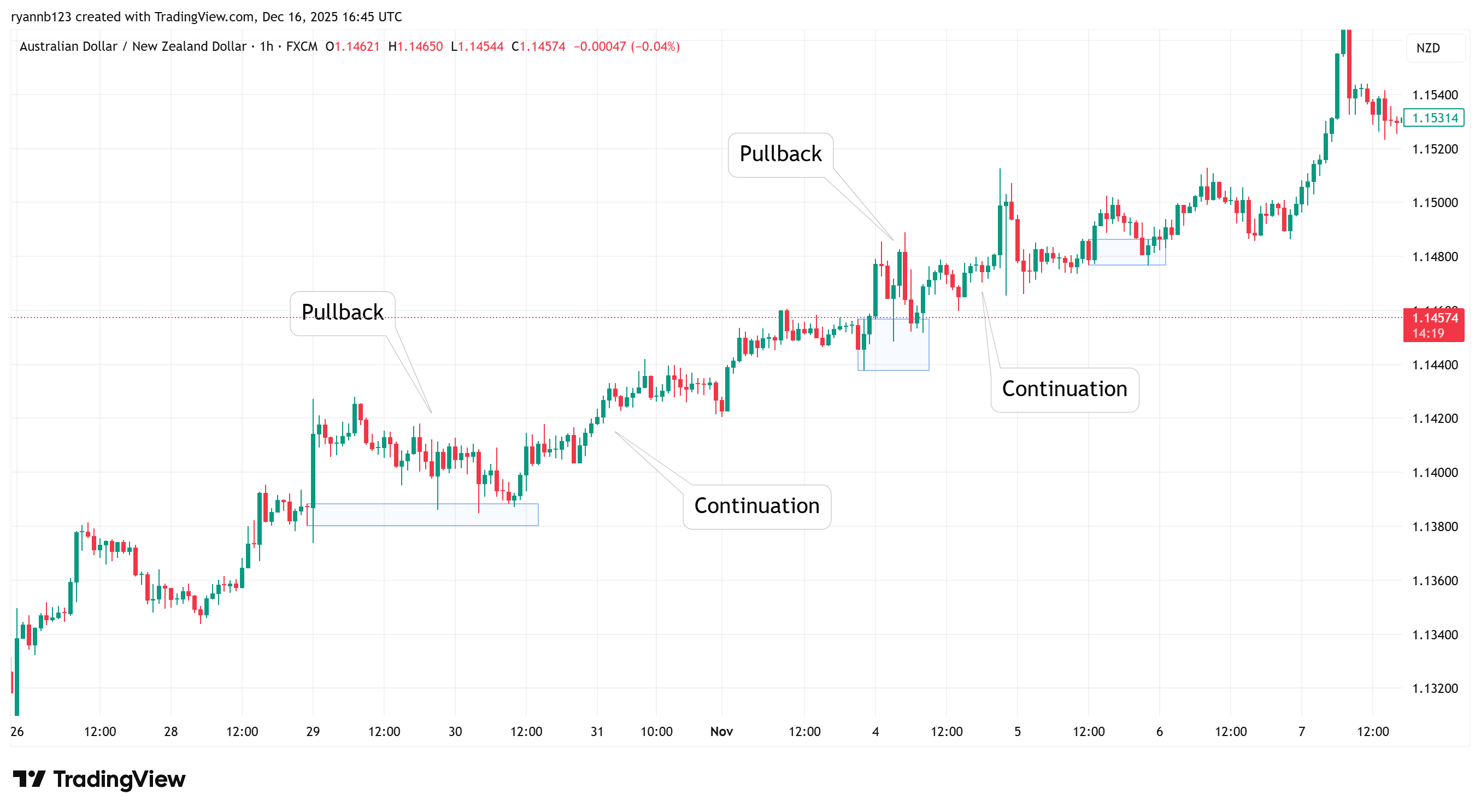
Trend continuation: Find a strong trend on the daily chart backed by fundamentals. Wait for a pullback to a key moving average (20 EMA or 50 SMA). When price bounces from the moving average with a bullish candle (for uptrends) or bearish candle (for downtrends), you enter. This catches the continuation of the existing trend.
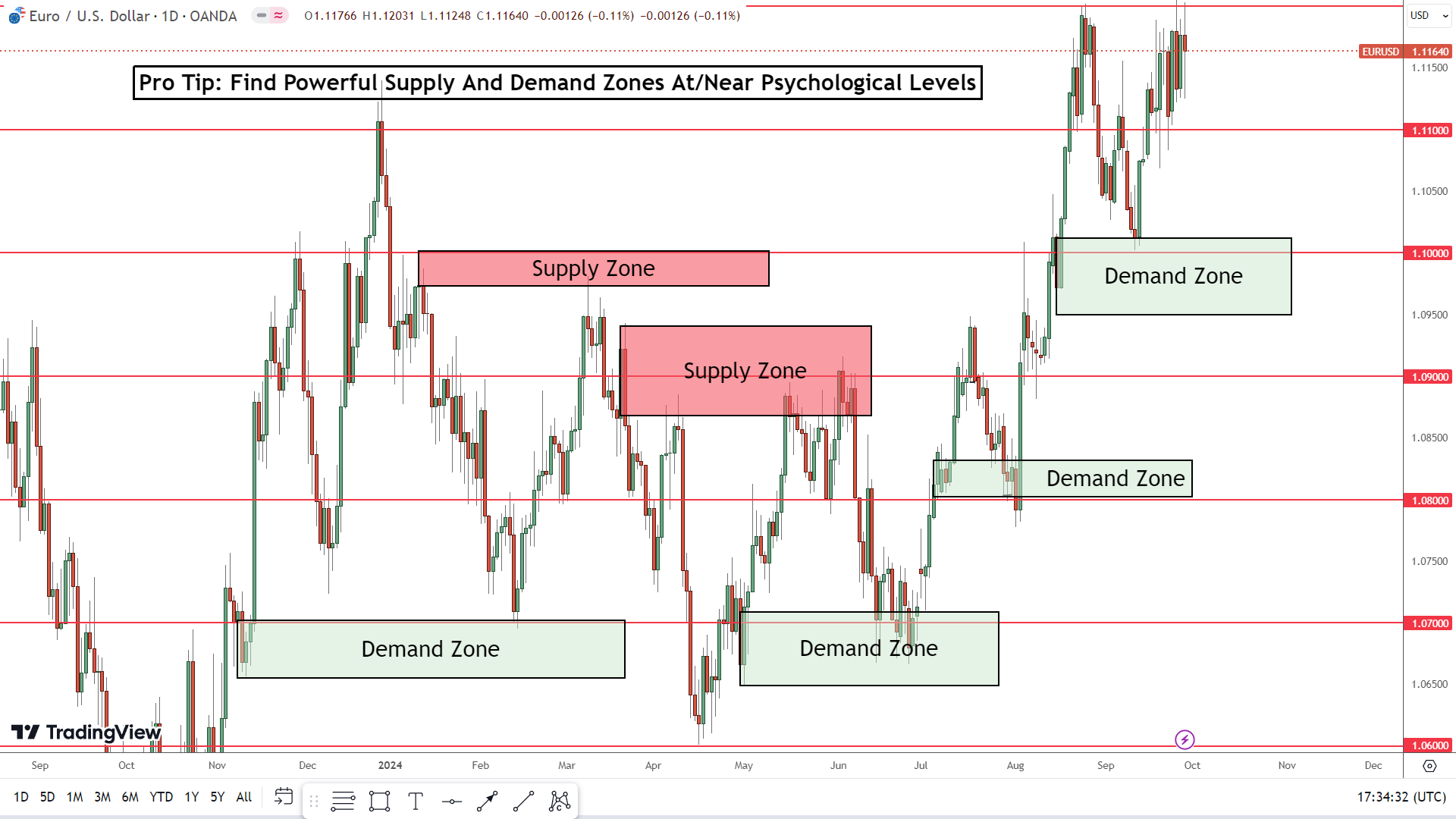
Supply and demand trading: Identify zones where institutions have previously accumulated or distributed positions. When price returns to these supply or demand zones and shows rejection with a clear candle pattern, you enter in the direction that respects the zone. These institutional footprints on daily charts create high-probability reversal or continuation setups.
Entry and Exit Rules
Entries happen when price reaches your predetermined level. For strategies like Fibonacci retracement trading, you place limit orders at the 61.8% level. The level itself is the signal — you don't wait for additional confirmation patterns. You trust the technical level and enter automatically when price reaches it.
For other swing trading approaches using support/resistance or supply/demand zones, confirmation becomes more important. You wait for a bullish candle pattern at that level - a pin bar, bullish engulfing, or morning star. This confirmation separates high-probability trades from low-probability ones.
Exits depend on your strategy. For Fibonacci-based trades, you target the -0.272 Fibonacci extension level. For support/resistance trades, you target the next major swing high (for longs) or swing low (for shorts), aiming for 2:1 or 3:1 risk-reward minimum.
Your stop-loss sits beyond the swing structure. For a long trade at a technical level, your stop goes below that level with a small buffer. This gives the trade room to breathe without getting stopped out on normal market fluctuations.
Why Swing Traders Fail
Impatience: You enter a trade based on daily chart analysis. The setup looks perfect. Then the price sits flat for three days. You get bored or doubt yourself. You close the trade early. Then it moves to the target without you. This happens repeatedly until you quit swing trading, thinking it doesn't work.
Moving stops: Price approaches your stop-loss. You move it further away, giving the trade "more room." This violates your trading plan. When you do this, you're no longer following a system - you're gambling and hoping. The trade usually hits your new stop anyway, but now you lost more money.
Taking profits too early: Your trade is up 100 pips toward your 180-pip target. You see the profit and take it, afraid it'll reverse. You made money, but you killed your risk-reward ratio. Now you need to win 60% instead of 40% to be profitable overall. This subtle mistake destroys accounts over time.
Cost Advantages
Fixed:
Cost Advantages
Swing trading costs are dramatically lower in spreads but you need to account for swap fees. Let's do the math with the same EUR/USD example.
You make 3 swing trades per week. That's 6 pips in spreads per week (assuming 1-pip spread, enter and exit twice per trade = 2 pips per trade × 3 trades = 6 pips).
6 pips × 4 weeks = 24 pips per month in spreads.
Now add swap fees. EUR/USD typically charges around $5-7 per night per standard lot (varies by broker and interest rate differential). If your average trade lasts 5 days and you have 3 trades per week running, you're paying roughly $75-100 per month in swap fees on a standard lot.
Total monthly costs: $240 (spreads) + $75-100 (swaps) = $315-340 per month.
Compare that to the day trader's $4,000 per month in spreads alone (no swap fees since positions close daily). You're still paying only 8-9% of what the day trader pays in transaction costs.
This cost advantage remains huge. It means you can be profitable with a lower win rate. A 45% win rate at 3:1 risk-reward makes you profitable in swing trading. That same win rate loses money in day trading after costs.
Time Commitment for Day Trading vs Swing Trading
Let's be honest about how much time each style actually requires.
Day Trading Screen Time
You need 4-8 hours per day at your screens during market hours. This isn't optional. You can't day trade properly while working a full-time job.
Your morning starts 30 minutes before market open. You review overnight news, the economic calendar, and prepare your watchlist. When markets open, you're watching. The first hour is often the most active - you're scanning for breakouts and making trades.
Midday slows down. Some day traders take a break during the lunch lull (noon-2pm in US markets). But you're still checking positions if you're in trades.
The afternoon session brings another wave of activity as European markets close and US traders position for the close. You're back at full attention. By market close, you've been actively watching screens for 6+ hours.
This doesn't include post-market review. Many day traders spend another 30-60 minutes reviewing their trades, updating journals, and preparing for tomorrow.
Total time commitment: 7-9 hours per day, 5 days per week. That's 35-45 hours weekly. It's a full-time job.
Can You Day Trade Part-Time?
No. The honest answer is no.
Some people claim you can day trade the first hour after market open, then go to work. This doesn't work. The first hour is volatile and requires full attention. You can't make good decisions when you're about to leave for work. You'll either skip trades (missing opportunities) or take bad trades (losing money).
Others claim you can day trade the last hour before market close. Same problem. You're exhausted from work. Your decision-making is impaired. You overtrade or revenge trade.
Part-time day trading is a path to losing money. If you can't commit full-time, don't day trade.
Swing Trading Screen Time
Swing trading requires 30 minutes to 2 hours daily, and not all at once. You can break this up:
Morning (15-30 minutes): Check your positions before market open. Review overnight news. Place or adjust orders if needed.
Midday (10-15 minutes): Quick check during lunch. See if any trades triggered, if stop-losses need adjustment based on market moves.
Evening (30-60 minutes): This is your main analysis time. Scan charts for new setups. Review existing positions. Plan tomorrow's trades. Update your trading journal.
Total time: 1-2 hours daily, flexible timing. You can do this while holding a full-time job.
Can You Swing Trade Part-Time?
Yes. Swing trading is designed for people with other commitments.
You analyze charts on daily or 4-hour timeframes. These don't require constant monitoring. You check them 2-3 times per day. Between checks, price action develops on its own. You're not missing anything by not watching every minute.
You use pending orders. Set your entry, stop-loss, and take-profit in advance. When price triggers your entry, you're in the trade automatically. You don't need to be at your screen to enter.
This flexibility is swing trading's biggest advantage. You maintain a full-time job, spend time with family, and still trade profitably. Day trading doesn't allow this.
Risk Management Differences Between Day Trading and Swing Trading
Risk management works differently for day trading versus swing trading. Let's break down what you need for each.
Day Trading Risk Management
Day trading concentrates exposure within a single session, so risk controls must operate on a daily framework.
Risk per trade is typically kept small (often well under 1%) because multiple trades may be taken in one session.
A predefined daily loss limit is critical. Once reached, trading stops for the day to prevent emotional escalation or overtrading.
Because execution happens in fast conditions, slippage and spread costs must be factored into position sizing.
Capital preservation depends less on account size and more on strict adherence to daily risk caps and execution discipline.
The emphasis in day trading is controlling intra-session drawdown.
Swing Trading Risk Management
Swing trading distributes exposure across multiple days, so risk management operates on a portfolio and time-based framework.
Risk per trade can be slightly higher, but total open exposure across all positions must be monitored.
Because positions are held overnight, traders must account for gap risk and potential volatility spikes.
Instead of daily loss limits, swing traders often think in terms of weekly or portfolio-level drawdown thresholds.
Position sizing must reflect wider stop distances and overnight uncertainty.
The emphasis in swing trading is controlling aggregate exposure across open positions.
Why Day Trading Risk Is Different
Day trading risk compounds through psychological fatigue. You're making decisions all day under pressure. By afternoon, you're tired. This is when mistakes happen - taking trades you shouldn't, moving stops, revenge trading after losses.
Transaction costs compound too. Every trade costs you the spread and potentially comissions. Make 100 trades per week and you're paying significantly more than someone making 3 trades per week.
The combination of psychological fatigue and high costs makes day trading riskier even when individual trade risk is smaller.
Why Swing Trading Risk Is More Manageable
You make fewer decisions. Each decision gets more time and thought. You analyze on higher timeframes where patterns are clearer. You're not rushed.
Overnight risk exists - news can gap price against you. But you account for this in position sizing. You accept that occasional gaps will happen and you have the capital to absorb them.
The mental toll is lower. You're not exhausted from watching screens all day. Your decision-making stays sharp. This alone improves your win rate compared to fatigued day traders.
Day Trading vs Swing Trading: Which Should You Choose?
Let's create a clear decision framework. Answer these questions honestly.
Capital Available
In the United States, the Pattern Day Trader (PDT) rule requires a minimum of $25,000 in account equity to execute four or more day trades within five business days in a margin account. If your account is below this threshold, you cannot actively day trade U.S. stocks.
Outside of U.S. equities (such as futures, forex, or in non-U.S. jurisdictions) this rule does not apply. In those markets, capital requirements depend on broker margin policies and your individual risk management, not a fixed regulatory minimum.
Your choice between day trading and swing trading should therefore be based on market access, margin structure, and personal risk tolerance.
Time Available
Full-time available: You could day trade, but ask yourself why. Do you want to sit at screens 8 hours daily? If yes, day trading is an option. If you'd rather have flexibility, swing trading works even with full-time availability.
Part-time (evenings/weekends): Swing trading only. Day trading doesn't work part-time. Don't fool yourself thinking you can day trade for 1-2 hours daily. You can't.
Variable schedule: Swing trading works perfectly. Check charts when you have time. Positions develop over days. You don't need fixed hours.
Personality Factors
Do you enjoy fast-paced environments? If yes, day trading might appeal to you. If no, swing trading is better.
Can you make quick decisions without second-guessing? Day trading requires this. If you analyze for 10 minutes before entering, you'll miss day trading setups. Swing trading gives you time to think.
How do you handle consecutive losses? Day traders face 5-10 losing trades in a row regularly. If this crushes you emotionally, day trading will break you. Swing traders face losing streaks too, but they're spread over weeks, not hours.
Do you need constant action? Some traders get bored without constant activity. Day trading provides this. But constant activity isn't the same as constant profits. Many traders confuse being busy with being profitable.
The Honest Assessment
Swing trading is easier to start with for 90% of traders. It requires less capital, lower costs, less time, and less psychological strain. You can work a full-time job while learning. You can build capital safely.
Day trading is harder. It requires more capital, full-time commitment, and extreme psychological resilience. Most traders who start with day trading lose money and quit within months.
The smart path: start with swing trading. Build capital. Learn to trade without pressure. If you're consistently profitable swing trading and want more activity, then consider day trading. But don't start there.
How to Start Day Trading or Swing Trading: Step-by-Step
Let's get specific about how to begin each style properly.
If Choosing Day Trading
Step 1: Learn a proven strategy and backtest it thoroughly. Complete at least 300 backtested trades before risking real capital. This shows you whether the strategy works and builds pattern recognition without financial risk.
Step 2: Understand capital requirements for your market. If you're trading U.S. stocks, you'll need $25,000 to avoid pattern day trader restrictions. For forex, futures, or non-U.S. markets, requirements vary by broker and depend on margin policies.
Step 3: Set up your trading station. You need at least two monitors, preferably three. One for charts, one for order entry and account management, one for news feeds. A fast computer. Reliable internet with backup connection.
Step 4: Choose your markets. Most day traders focus on forex majors (EUR/USD, GBP/USD, USD/JPY) or index futures (S&P 500, NASDAQ). These have tight spreads and high liquidity. Don't day trade exotic pairs or illiquid stocks.
Step 5: Paper trade for 3 months minimum. Use TradingView's paper trading or your broker's demo account. Trade as if it's real money. Track every trade. This shows you the reality of day trading without risking capital.
Step 6: Set strict risk rules. Risk per trade should be kept small (often well under 1%). Set a daily loss limit. If you hit the daily loss limit, you're done for the day. No exceptions.
Step 7: Keep detailed records. Every trade goes in your journal. Entry reason, exit reason, profit/loss, what you did right, what you did wrong. Review weekly.
If Choosing Swing Trading
Step 1: Learn a proven strategy and backtest it thoroughly. Complete at least 300 backtested trades before risking real capital. This proves the strategy works and builds your pattern recognition without financial risk.
Step 2: Set up basic tools. You need one good computer and a trading platform with clean charts. TradingView works fine. You don't need expensive software or multiple monitors.
Step 3: Choose your markets. Forex majors work well (EUR/USD, GBP/USD, AUD/USD). Major indices (S&P 500, NASDAQ). Gold. Pick 5-6 instruments maximum to watch.
Step 4: Paper trade for 1-2 months. Less time than day trading because you're making fewer decisions. But still paper trade first. Take 15-20 paper trades to prove you can follow your system.
Step 5: Go live with small size. Start with mini lots (10,000 units) or micro lots (1,000 units). Your first 20 live trades should be with small size. You're learning to manage emotions with real money.
Step 6: Scale up slowly. After 20 profitable trades at small size, increase to standard lots. After 50 profitable trades, reassess your position sizing. Don't rush this.
Step 7: Review weekly, not daily. Check your trades once per week. Did you follow your rules? What patterns are working? What needs adjustment? Weekly review prevents overanalyzing.
Practice Methodology Differences
Day trading practice requires time. You need to paper trade during live market hours. Set aside 4-6 hours daily for 3 months. This is the commitment required to learn properly.
Swing trading practice takes less time. You can paper trade by scanning historical charts on weekends. Identify setups, mark entries, and scroll forward to see results. Do this for 5-10 hours per week over 6-8 weeks. You'll review hundreds of setups.
Both methods work, but swing trading practice fits around a full-time job. Day trading practice doesn't.
Final Thoughts
Swing trading versus day trading isn't about which is "better." It's about which fits your situation.
Day trading demands full-time commitment, significant capital ($25,000+ depending on the market and if you are US-based), sophisticated tools, and extreme psychological resilience. It's harder than it looks. The failure rate is brutal. Most traders lose money and quit within months. If you have the capital, time, and mental strength, day trading offers the excitement of fast-paced trading and, if mastered, can produce more money due to trade frequency. But be honest with yourself about the challenges.
Swing trading works for most people. You can work full-time while learning. You need less capital ($3,000-$5,000 to start). Transaction costs are a fraction of day trading. The psychological demands are lower because you're not making split-second decisions under pressure. The learning curve is gentler. Success rates are higher.
The smart path for beginners is swing trading. Build capital safely. Learn to trade without the pressure of constant decisions. Prove you can follow a system and manage emotions. If you're consistently profitable and want more activity later, you can transition to day trading.
At The Trading Cafe, we teach structured swing trading methods with proven strategies, real risk management, and a community of traders committed to learning properly. You'll get access to professional traders who teach the Fibonacci retracement strategies you saw in this article, complete trading systems with clear entry and exit rules, and support from students who are working through the same challenges you face.
Join The Trading Cafe Free School: https://thetrading.cafe